Screens are added, landscaping is intensified and orientations are adjusted. While these measures can improve privacy, they do not eliminate overlap.
At Gökçe Gemile Private Bay, the process begins from a different premise. Living spaces are not designed first and separated later. They are conceived from the outset as independent environments that do not intersect visually, acoustically or functionally.
This approach is central to the estate’s identity. Located on a secluded peninsula on the Mediterranean coast of Turkey, Gökçe Gemile is not a hotel or a conventional villa development. It is an ultra luxury villa estate where privacy is shaped by geography, architecture and distance.
What Does Overlap Mean in Residential Design?
Overlap occurs when living spaces affect one another. This can happen visually, when one residence looks directly into another. It can happen acoustically, when sound travels between structures. It can also occur functionally, when circulation routes, outdoor areas or amenities are shared.
In many high-end properties, privacy is reduced not because the residences themselves are inadequate, but because the surrounding environment allows these forms of overlap to occur.
Designing living spaces that do not overlap means removing the conditions that create these interactions in the first place.
Visual Independence
The most obvious form of overlap is visual. Even in large properties, direct sightlines between buildings can compromise the sense of separation.
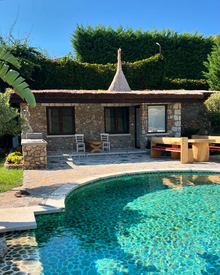
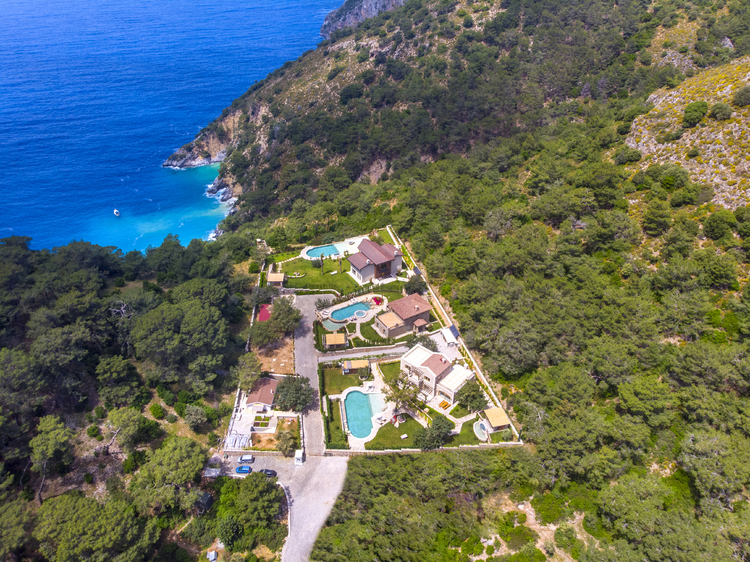
At Gökçe Gemile, each villa is positioned to maintain visual independence. Structures are oriented according to terrain, elevation and vegetation rather than convenience or symmetry.
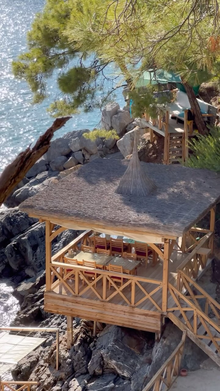
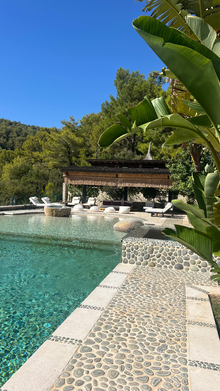
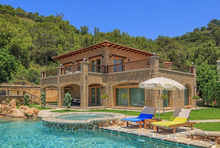
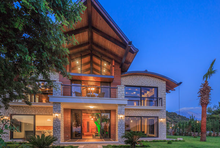
The villas within the Villas collection-including Villa Gökçe, Villa Elmalı and Villa Gemile-occupy distinct positions across the peninsula, ensuring that their primary views remain uninterrupted and their outdoor spaces remain private.
Acoustic Separation
Privacy is not only about what can be seen. It is also about what can be heard.
In dense developments, sound often reveals the presence of others even when visual screening is effective. Shared activity, nearby circulation and close building placement create an acoustic overlap that is difficult to eliminate.
At Gökçe Gemile, acoustic separation is achieved through distance, topography and natural vegetation. The result is an environment where silence remains stable rather than intermittent.
This relationship is explored further in How Architecture Can Protect Privacy.
Functional Independence
Functional overlap occurs when different living spaces rely on the same routes, facilities or outdoor areas.
In traditional hospitality environments, this is common. Shared pools, communal lounges and central circulation areas create constant interaction.
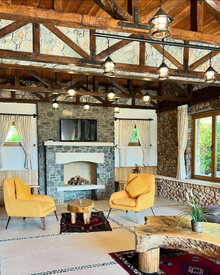
Gökçe Gemile is structured differently. There are no shared spaces and no public access. Each villa functions as a complete and autonomous living environment.
This means that privacy extends beyond the interior of the residence and into the way the estate itself is used.
Geography as the Foundation of Separation
Designing non-overlapping living spaces begins with geography. Architecture alone cannot fully remove overlap if the land itself does not support separation.
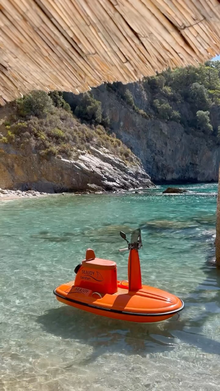
The peninsula provides the ideal framework. Surrounded by water on multiple sides and shaped by natural contours, it creates distance and restricts exposure.
This geography allows each villa to occupy its own part of the landscape, rather than existing as one component within a dense cluster.
The Role of Topography and Vegetation
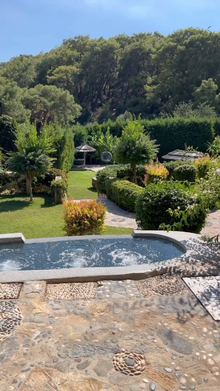
Natural elevation changes and mature vegetation reinforce independence between living spaces.
At Gökçe Gemile, landscape is used as a functional tool rather than a decorative element. Trees, shrubs and terrain contours define boundaries without requiring walls or visual barriers.
This approach is explored in Natural Barriers: How Landscape Creates True Privacy.
Architecture That Responds to the Land
When living spaces are designed not to overlap, architecture must respond to the landscape rather than override it.
Buildings are placed according to existing conditions-view corridors, solar orientation, wind patterns and natural boundaries. This creates a layout that feels organic rather than imposed.
At Gökçe Gemile, architecture follows the logic of the peninsula, preserving both openness and privacy simultaneously.
Why Non-Overlapping Design Feels Different
The effect of non-overlapping design is often subtle, but immediate. Spaces feel calmer. Movement feels more private. The environment becomes defined by continuity rather than interruption.
This is particularly important in environments intended for extended stays, where the quality of the surrounding space matters as much as the architecture itself.
When living spaces do not overlap, privacy becomes consistent rather than occasional.
FAQ: Designing Independent Living Spaces
What is meant by overlap in architecture?
Overlap refers to visual, acoustic or functional interaction between living spaces that reduces independence and privacy.
Can landscaping alone prevent overlap?
Landscape helps significantly, but it must be combined with careful positioning and architectural planning.
Does Gökçe Gemile include any shared spaces?
No. The estate is structured without shared or communal areas, allowing each villa to function independently.
Why is non-overlapping design important in luxury properties?
Because it transforms privacy from a feature into a permanent condition.
Conclusion
Designing living spaces that do not overlap requires more than thoughtful architecture. It requires alignment between geography, landscape and spatial planning.
At Gökçe Gemile Private Bay, each villa is positioned as an independent living environment within a much larger private landscape. Visual, acoustic and functional overlap are minimized by design rather than managed after the fact.
The result is a rare form of luxury where privacy is not created through barriers, but through distance, silence and the deliberate absence of interference.