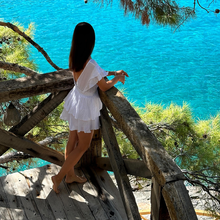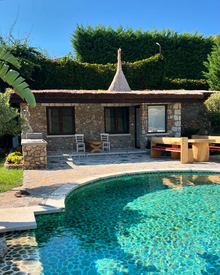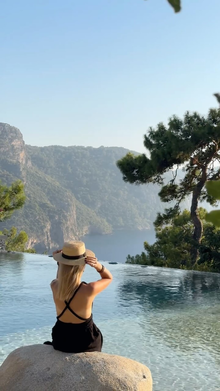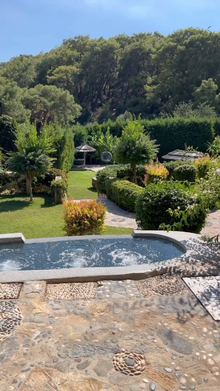
In luxury hospitality, the term “private island” is frequently used as a marketing metaphor. In reality, true island conditions are rare. Physical separation, controlled access, absence of public interface and uninterrupted spatial continuity are not easily replicated.
However, geographic insularity is not the only way to produce isolation.
A private island feeling can be created through spatial discipline rather than geography. The difference lies not in water surrounding land, but in how boundaries, density and access are organized.
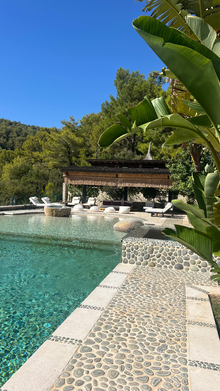
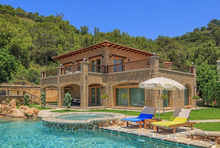
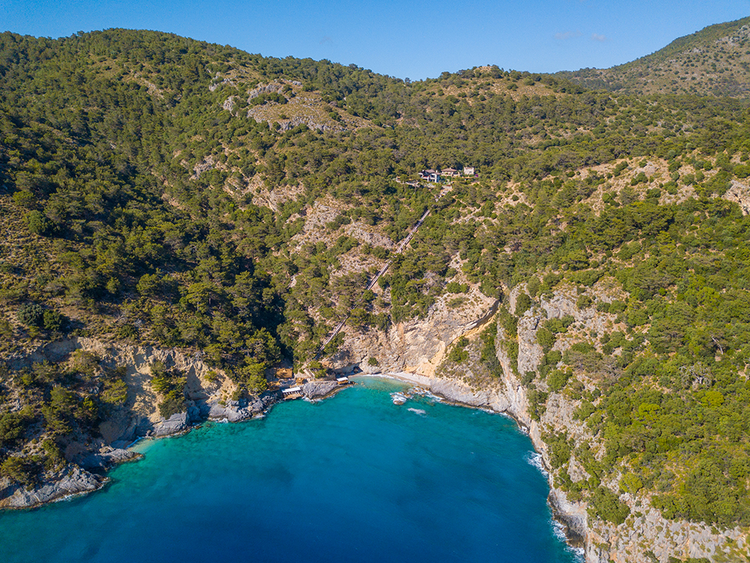
At Gökçe Gemile Private Bay, this principle forms the core of the estate model: a peninsula condition transformed into a private island-style spatial experience without being a literal island.
1. Isolation Is a Spatial Condition, Not a Marketing Claim
An island is defined by separation.
But separation can be produced architecturally through:
Controlled single-point accessTopographical thresholdsNatural edges such as forest lines or steep slopesAbsence of shared circulation areasWhen land is bordered by strong natural boundaries and access is limited to a single narrow route, spatial isolation begins to form - even if the site is technically a peninsula.
Exclusivity is not declared.
It is designed.
2. Distance Instead of Density
Most coastal developments maximize buildable area.
Higher capacity is often equated with economic efficiency.
A private island-style estate operates differently.
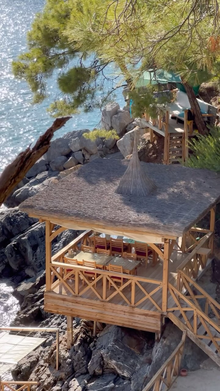
Total built footprint is consciously reducedStructures are separated across the terrainOpen land dominates built massWhen buildings do not visually intersect, when terraces do not overlook one another, when gardens function as spatial buffers, privacy is produced architecturally - not administratively.
Walls become unnecessary.
Distance becomes the primary design tool.
At Gökçe Gemile Private Bay, the total building footprint remains a small fraction of the overall land area, allowing landscape to dominate structure rather than the opposite.
3. Topography as a Natural Perimeter
On steep coastal terrain, slope should not be flattened - it should be preserved.
Even 3–5 meters of elevation difference between structures can create complete visual independence.
Instead of carving artificial platforms, buildings can follow natural contour lines.
This maintains land continuity and reinforces separation without visible barriers.
In this model, topography becomes the true perimeter.
4. Landscape as a Structural Element
In many developments, landscape is decorative.
In a private island-style estate, landscape is structural.
Existing trees determine building placementGardens act as spatial buffersOpen areas exceed built surfacesNo mature trees are removedWhen architecture adapts to vegetation - rather than vegetation adapting to architecture - privacy becomes organic rather than defensive.
Nature becomes the organizing logic.
5. Sea Relationship Without Overexposure
True isolation does not require aggressive shoreline intervention.
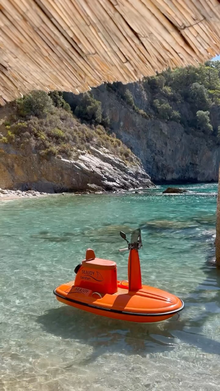
Instead of heavy terracing or wide concrete platforms, controlled access systems - such as inclined mobility solutions - allow connection without destroying slope continuity.
Each structure maintains its own horizon line.
Private waterfront areas do not visually overlap.
The sea becomes an extension of territory - not a shared spectacle.
6. Interior–Exterior Continuity
A private island atmosphere depends on uninterrupted spatial flow.
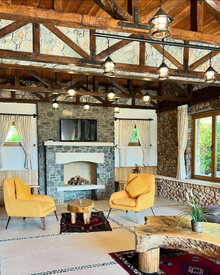
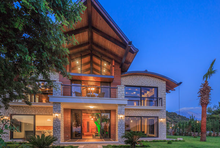
Panoramic openingsLarge terracesMaximum daylight penetrationMinimal visual obstructionInterior spaces are oriented toward both forest and sea, dissolving the boundary between architecture and landscape.
The horizon becomes part of the plan.
Light replaces enclosure.
The building feels less like an object and more like a condition.
7. Estate Logic Instead of Hotel Logic
A hotel operates through shared systems.
An estate operates through territorial control.
In a private island-style estate:
There are no public corridorsNo shared lobbyNo overlapping circulationNo anonymous guest flowMovement is decentralized.
Territory is unified under a single ownership logic.
This produces a psychological shift from hospitality toward sovereignty.
Conclusion: Geography Helps, Spatial Discipline Creates
A private island is not defined only by water around it.
It is defined by:
Controlled accessReduced densityTopographical separationLandscape-led planningAbsence of shared exposureGeography can support isolation - but spatial discipline ultimately creates it.
When these principles are applied carefully, even a peninsula can feel like an island.
At Gökçe Gemile Private Bay, this approach forms the foundation of a private island-style estate model - where isolation is not marketed, but designed.