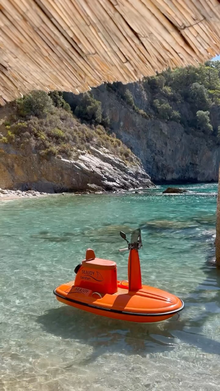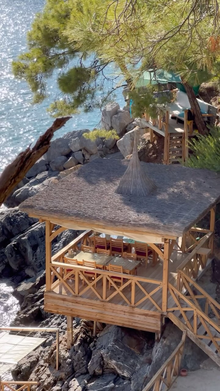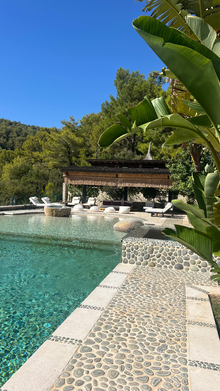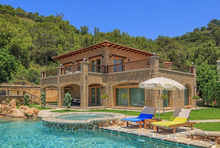
On the Mediterranean coast, where tourism, marinas and coastal settlements have expanded over decades, silence has become an increasingly rare spatial quality. It is not created simply by reducing sound, but by choosing a landscape capable of protecting it.
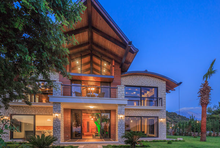
At Gökçe Gemile Private Bay, silence is not introduced after development through architectural solutions or operational policies. It begins with the peninsula itself. This ultra luxury villa estate was established on a secluded stretch of coastline where geography naturally limits external movement, visual density and environmental disturbance.
Here, silence is not an added luxury. It is a characteristic of the land.
Silence Begins with Geography
Architecture can soften noise, absorb sound and create protected interior spaces. Geography, however, determines whether silence can exist beyond the walls.
The shape of the land, surrounding vegetation, coastal orientation and distance from major circulation routes all influence the acoustic character of a place.
At Gökçe Gemile, the peninsula forms a naturally protected environment where the surrounding landscape reduces many of the external conditions that typically interrupt quiet coastal living.
This demonstrates that silence is not only an acoustic condition but also a geographical one.
Distance Creates Quiet
Silence is often associated with isolation, but distance and isolation are not identical.
What creates lasting quiet is not complete remoteness, but sufficient separation from continuous human activity. Roads, dense waterfront development and public circulation introduce constant movement that changes the character of a place.
The peninsula allows Gökçe Gemile to remain connected to the mainland while maintaining meaningful spatial distance from surrounding activity.
This balance preserves accessibility without sacrificing tranquility.
The Role of Natural Boundaries
Natural boundaries contribute significantly to silence.
The Mediterranean surrounding the peninsula acts as more than a scenic element. It creates physical separation that reduces both movement and environmental pressure from multiple directions.
Vegetation, changes in elevation and the natural contours of the land further soften sound before it reaches the living spaces.
These qualities are explored in greater detail in Natural Barriers: How Landscape Creates True Privacy.
Silence Beyond the Architecture
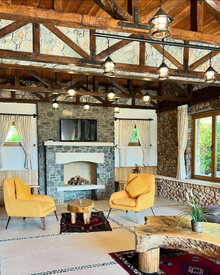
Many luxury properties provide quiet interiors through construction techniques and high-performance materials.
At Gökçe Gemile, silence extends beyond the buildings themselves.
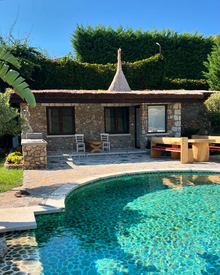
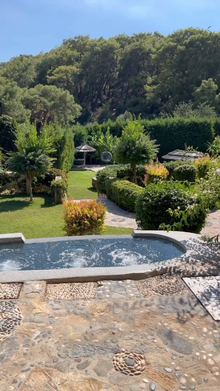
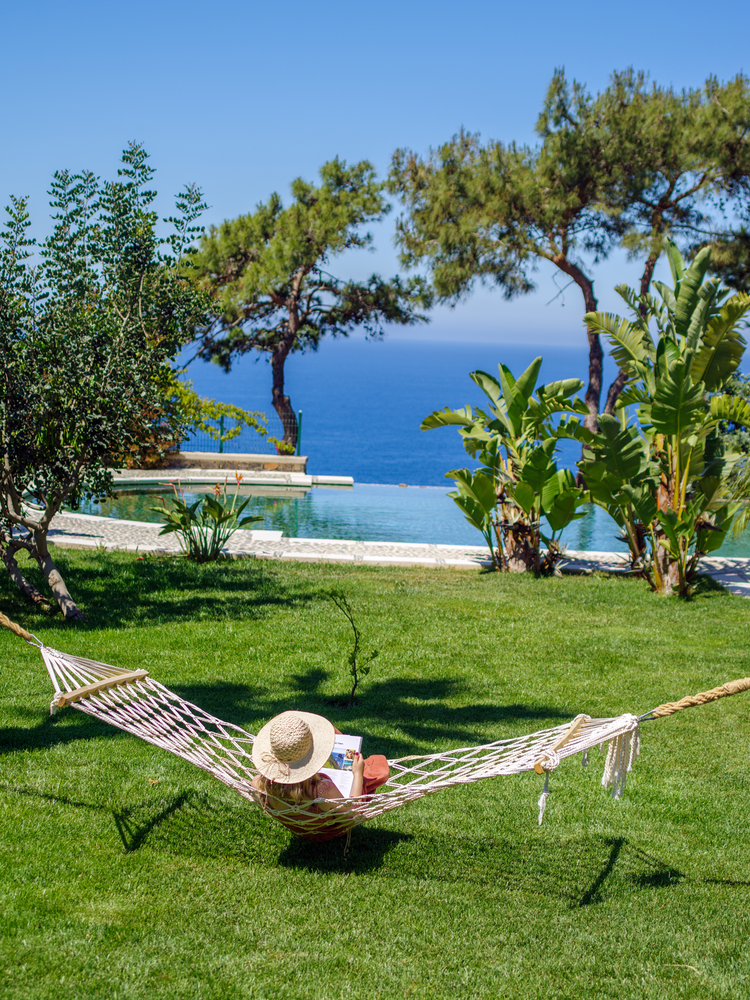
Outdoor terraces, gardens, pathways and coastal viewpoints remain part of the same calm acoustic environment because the surrounding geography continues to protect them.
This allows silence to become an experience of the entire estate rather than a feature limited to enclosed spaces.
Visual Calm Supports Acoustic Calm
The perception of silence is influenced not only by sound but also by visual conditions.
Dense development, frequent movement and crowded surroundings often create a psychological sense of activity even when actual noise levels remain relatively low.
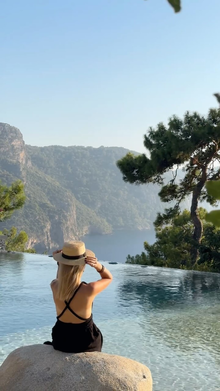
At Gökçe Gemile, open horizons, natural vegetation and limited visual interruption reinforce the feeling of quietness.
Landscape and silence become mutually supportive qualities.
Architecture That Protects the Quiet Landscape
Silence depends not only on geography but also on architectural restraint.
Buildings that dominate the landscape often introduce additional visual and functional intensity. By contrast, architecture that follows the existing topography allows the surrounding environment to remain the primary presence.
This relationship is discussed further in When Architecture Disappears Into the Landscape.
At Gökçe Gemile, architecture supports the geography that already protects silence.
A Different Rhythm Along the Coast
The Mediterranean is often associated with vibrant waterfronts, marinas, restaurants and active coastal life.
Gökçe Gemile represents a different interpretation of the same coastline.
Here, the rhythm of the day is defined by changing light, wind through the trees, gentle movement of the sea and uninterrupted natural surroundings rather than constant human activity.
This creates an environment where silence becomes part of daily living instead of an occasional escape.
Silence as a Spatial Luxury
Luxury has traditionally been associated with larger buildings, premium materials and exceptional services.
Increasingly, however, one of the rarest forms of luxury is the ability to experience uninterrupted quiet.
This type of silence cannot be manufactured through architecture alone. It requires geography capable of protecting openness, limiting density and preserving natural distance.
In this sense, silence becomes a spatial quality rather than simply an acoustic one.
FAQ: Silence and Coastal Geography
Why is silence considered a geographical quality?
Because the shape of the land, surrounding water, vegetation and distance from development all influence the long-term acoustic environment.
Can architecture alone create silence?
Architecture can reduce sound inside buildings, but lasting silence across an entire landscape depends on geography.
How does the peninsula contribute to quiet living?
It naturally limits surrounding development, controls access and creates physical separation from continuous coastal activity.
Why is silence important in luxury estates?
Because uninterrupted quiet enhances privacy, wellbeing and the overall perception of spatial freedom.
Conclusion
Silence is not simply the absence of noise. It is the result of geography, distance, natural boundaries and thoughtful architectural restraint working together.
At Gökçe Gemile Private Bay, the Mediterranean coastline is experienced not through activity or density, but through calm, openness and continuity. The peninsula protects an environment where silence remains part of the landscape itself.
Here, luxury is measured not by how much is added to the environment, but by how completely the geography allows silence to endure.